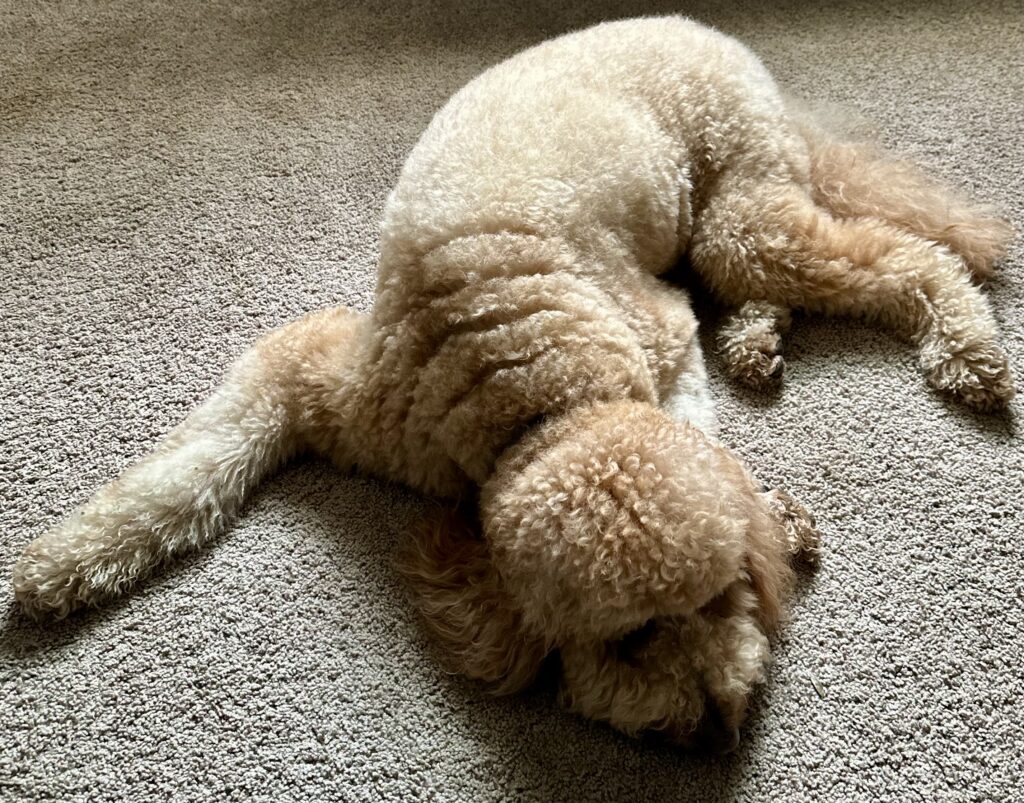
An old fable goes like this: There is a wise, old Native American Chief who is sitting at a campfire with his grandson. “I have two dogs who live inside me,” the grandfather told the boy. For a few moments, the child appears lost in thought and then asked his Grandpa to tell him more about the dogs. “One of the dogs is good and the other one always behaves badly,” answered the old man. The boy asked which one is stronger. “The one I feed the most,” replied the Chief.
What the story tells me is that our lives are very much driven and shaped by a multitude of momentary decisions. We all walk around through our lives with those two dogs, Each moment brings us to a choice. How do we want to respond to the conditions that we are facing? Which direction do we want to take?
But it gets much more complicated. These moments have all been shaped by, among many other things, the moments that preceded it, each affecting you and the rest of the universe. (All things influence all things because everything is interconnected; Thich Nhat Hanh called this Interbeing.) So, when we take a momentary step toward something harmful, to ourselves or others, it makes another such decision more likely. It is as if we fill the bad dog’s food bowl every time we move in an unwholesome direction.
Perhaps we decide to write a nasty letter. That’s one moment. Each word we write is another decision. But maybe we come to a second thought: Perhaps this nasty letter is unnecessary, a bad idea. Now we’ve just gotten out the other bowl. And the more movement forward in the feeding process, the darker or lighter things get. The larger a tree grows, the stronger and more rooted it gets; the longer you let a weed grow, the harder it will be to pull it out of the ground.
So the further in we get, the deeper our involvement, like going into the ocean. The qualities of what we are doing become heavier, more internalized, and more difficult to turn away from. The deeper we go, the greater the involvement, positive or negative. So, when we want to keep ourselves out of harmful situations, the less food we give the bad dog, the less power it has. Similarly, the more we can extend a helpful commitment to something – going to the gym, maintaining a mindfulness practice, picking up your clothes off the floor – the easier it is to keep up with it.
To nail it down a bit more, let’s look further into the relationship between time and commitment. It is, I would suggest, much more difficult to go to the gym for the first time than the 50th. Similarly, an addiction is significantly easier to manage six months into our recovery from it than it was on day one. The more we move in a direction, the more profound the effect of that direction will be. So watching ourselves becomes critical in our self care because when we are mindful of our thoughts and behaviors, we can see early on the direction we are going in and either try to continue doing something helpful or catch our mistake and retreat from it, depending on the situation.
I wish you great success with your own good and bad dogs and hope you always are quick to recognize which one you’re feeding!